
Hoof conformation defects: a complete guide to prevent and correct
A horse's conformation directly impacts hoof health, balance and performance. A complete guide to causes, consequences and solutions, from the foal to the adult.
Introduction
A horse’s conformation plays an essential role in its health, balance and performance. When abnormalities appear, they can lead to hoof problems that compromise the animal’s comfort and physical capacity. Understanding the causes and consequences of conformation defects is essential to adopt effective preventive and curative solutions. This article offers a detailed analysis to guide you in caring for your horses’ hooves.
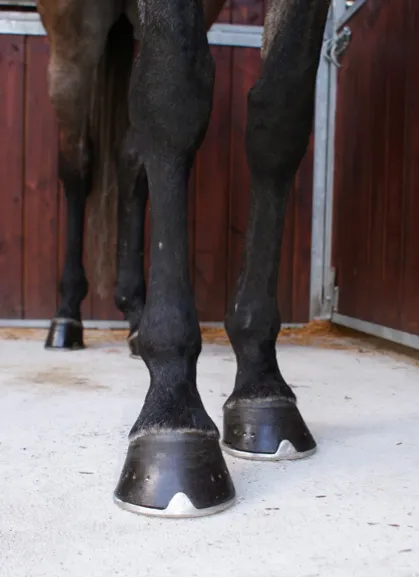
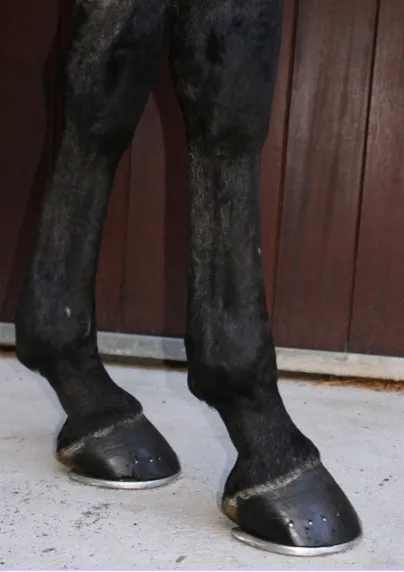
Conformation defects in the adult horse
Conformation defects — that is, misalignments of the various bone segments — manifest in horses as deviations such as toed-in (pigeon-toed) or toed-out (splay-footed) feet, valgus angular deviations (outward), varus angular deviations (inward), axial rotations, or deviations in the sagittal plane.
These conformation defects often come with postural defects.
These abnormalities are partly linked to genetic factors.
For example, heavy horses with broad chests are more frequently toed-in, while narrower Thoroughbreds often show toed-out conformation. Some breeds, like the Iberian horses, stand out with straighter feet, especially when looking at the sagittal angle (the pastern-foot axis seen from the side). However, these traits are not universal, and exceptions always exist.
Environment and sport or leisure use also play an important role. Inadequate ground or improper husbandry can amplify these abnormalities.
Left untreated, these defects have significant repercussions.
Hygiene of the frog and white line is critical, because in some cases it degenerates into hoof pathologies (thrush and white line disease).
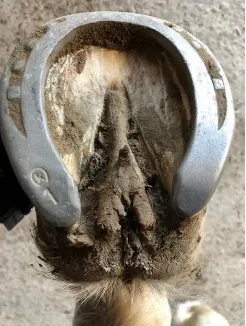
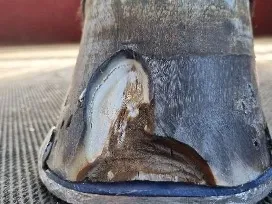
Uneven hoof wear — also called the hoof capsule — can become deformed and, over time, affect the joints as well as their tendinous and ligamentous biomechanical function, leading to lameness and loss of performance.
Incorrect conformation can also have a direct impact on the horse’s overall balance, encouraging postural asymmetries that the muscles try to compensate for. Eventually these compensations amplify the original defects and alter the general biomechanics.
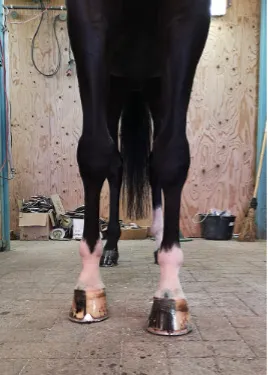
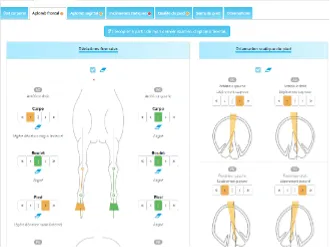
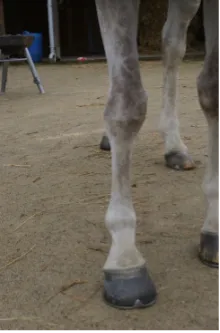
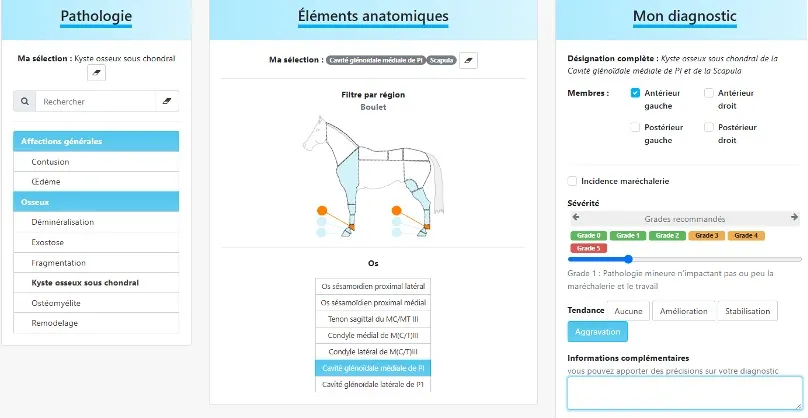
To remedy these problems, it’s crucial to schedule regular check-ups with a qualified farrier or equine veterinarian. Modern tools such as the HIPPOTYPOSE software allow precise analysis of conformation across multiple planes: frontal, sagittal, horizontal and postural.
This kind of digital tool aims to gather observations on conformation over time, so that elements perceived subjectively by the practitioner during clinical visits can be made objective.
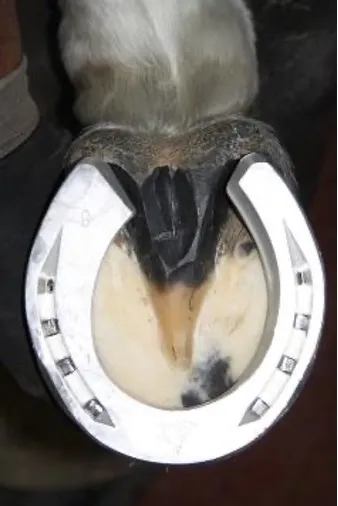
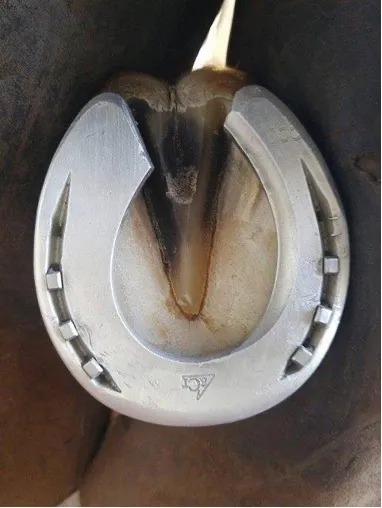
A trim or shoe adapted to the shape of the hooves and the horse’s specific needs helps restore balance of the supports and limit future deformations.
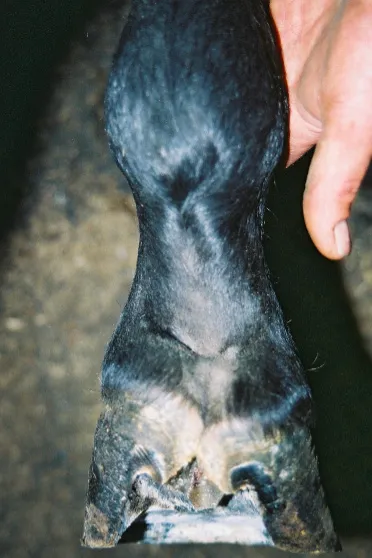
In most foot deformation cases (hoof capsule, sole), the shoe and its placement under the foot, combined with an adapted trim, are the best tools to help the foot bear its loads.
Example: asymmetric shoes help rebalance the foot during the support phase. The hoof’s sinking into a soft surface is what reduces the risk of foot and conformation deformations.
As mentioned at the start of this article, conformation impacts the different phases of locomotion (stance phase, support phase, propulsion phase) and, consequently, the mobility (elasticity, deformation) of the foot. In some cases, this triggers a chain reaction.
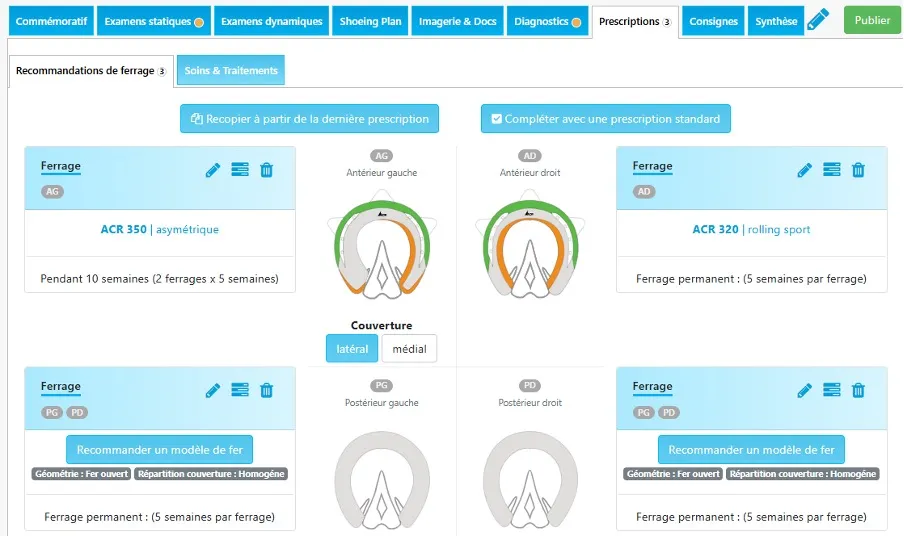
Body mass, limb trajectory, propulsion: these locomotion interactions are difficult to interpret. HIPPOTYPOSE lets you put all these static and locomotor parameters into perspective, so that an objective, adapted diagnosis can be made during the clinical visit. The HIPPOTYPOSE algorithm, combined with the practitioner’s diagnoses, suggests shoeings adapted to the identified pathologies.
These suggestions are one of several possible options.
Finally, the platform produces a synthesis for the horse’s owner and, where useful, transmits the full history of clinical visits to other collaborators or specialists, in order to facilitate and optimise follow-up and the understanding of successive examinations.
Conformation defects in foals: causes and solutions
Foals are particularly vulnerable to conformation defects, especially during the first six months of life — a period of rapid growth.
Angular deviations are common and often due to genetic factors or contractures. If they aren’t corrected early, these abnormalities can become irreversible.
Regular monitoring by a farrier (working with the breeder and the veterinarian) is essential during this critical period.
Early trimming corrects minor abnormalities, while more advanced techniques — such as Dallmer orthopaedic shoes or Shufix resin feet — may be necessary for more complex cases.
These materials create an artificial volume around the foot to correct support.
In severe situations, close cooperation between veterinarian and farrier is recommended, with radiographic exams to assess the extent of the deviations.
The environment in which the foal develops also plays a key role. Firm ground benefits foals with hyperlaxity, while softer surfaces are better suited to those suffering from contractures.
Good bedding management — thick and clean — and outings adapted in duration and frequency help limit the effects of conformation abnormalities. Increased monitoring of abscesses, necrosis, sores and bulbs may also be necessary to ensure optimal recovery.
Preventing and correcting hoof abnormalities
For owners, prevention is key. Regular hoof monitoring helps detect abnormalities as soon as they appear.
A balanced diet promotes healthy growth and reduces the risk of structural problems.
Environmental management — with adapted ground and careful bedding — is another essential preventive factor.
When a problem is identified, fast intervention increases the chances of correction. Orthopaedic treatments — whether custom-forged shoes or specialised resins — are often effective at restoring hoof structure and conformation.
For the most complex cases, options like shockwave therapy or surgery can be considered by the equine veterinarian. Continuous follow-up by competent professionals guarantees lasting results.
Conclusion
Conformation is a fundamental element of horse health and well-being.
By understanding the causes and consequences of conformation defects, owners can adopt appropriate preventive and corrective measures. Regular professional follow-up is essential to guarantee optimal performance and preserve the horse’s long-term health.
Trust the experts to give your equine companions the best possible future.